
Your race nutrition was chosen by a person who no longer exists by kilometre 90.

Why does sports nutrition taste worse the longer you go?
Sensory-specific satiety. Repeated exposure to one sensory profile devalues it, so the fourth gel genuinely tastes worse than the first even though nothing about the gel has changed. Your palate adapts and your appetite for that specific thing collapses.
Food scientists have documented this for decades. Endurance sport is where it starts costing you something.
The bit that surprises people
Preference does not only fade. It moves.
Work on cyclists found that during the first hour riders preferred the sweeter, higher-carbohydrate drink. Past 60 minutes that reversed and they began favouring the saltier option. The same athlete wants a different thing at hour three than the one they packed at hour zero.
Why this is a fuelling problem, not a comfort problem
Under-fuelling is rarely a maths problem. Most athletes know the target is 60 to 90 g an hour. They stop hitting it because the next dose has turned unpleasant, so they push it back fifteen minutes, then another fifteen, and reach the last hour eighty grams down.
Nothing in that sequence is a failure of knowledge. It is a failure of appetite, and appetite is a product problem.
What actually works against it
Rotate texture, not just flavour
Sensory-specific satiety attaches to the whole sensory profile. Swapping one sweet gel for a different sweet gel changes less than moving between something you drink and something you chew.
Put the baseline in the bottle
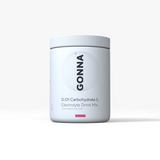
Drink mix delivers carbohydrate you barely register. D.O1 Drink Mix runs 32 g and 300 mg of sodium per scoop, so an hour of fuelling arrives without a decision.
Keep something salty available
Once past that 60 minute inflection, savoury lands better than sweet for a lot of people.
Test at hour four, not hour one
Anything tastes fine at hour one. Build the plan you will still want deep into the effort.
Where we sit on this
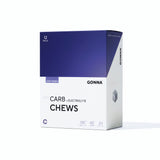
We built C.O1 Carb Chew to be lightly tart and gone in thirty seconds rather than syrupy and lingering, because the aftertaste is what turns you off the next one. Six cubes per strip also means you can take three, wait, and take three more when you want them rather than committing while you still can.
That is a design choice made against this specific failure, and it is why the reviews keep using the word treat.
Fuel you look forward to is fuel you finish.
Shop C.O1 Carb ChewTom
Sources
- Hetherington, M. et al. Sensory-specific satiety and its importance in meal termination. Neuroscience & Biobehavioral Reviews.
- Passe, D. et al. Palatability and voluntary intake of sports beverages, diluted orange juice, and water during exercise. International Journal of Sport Nutrition and Exercise Metabolism.
- Jeukendrup, A. (2008). Carbohydrate feeding during exercise. European Journal of Sport Science.